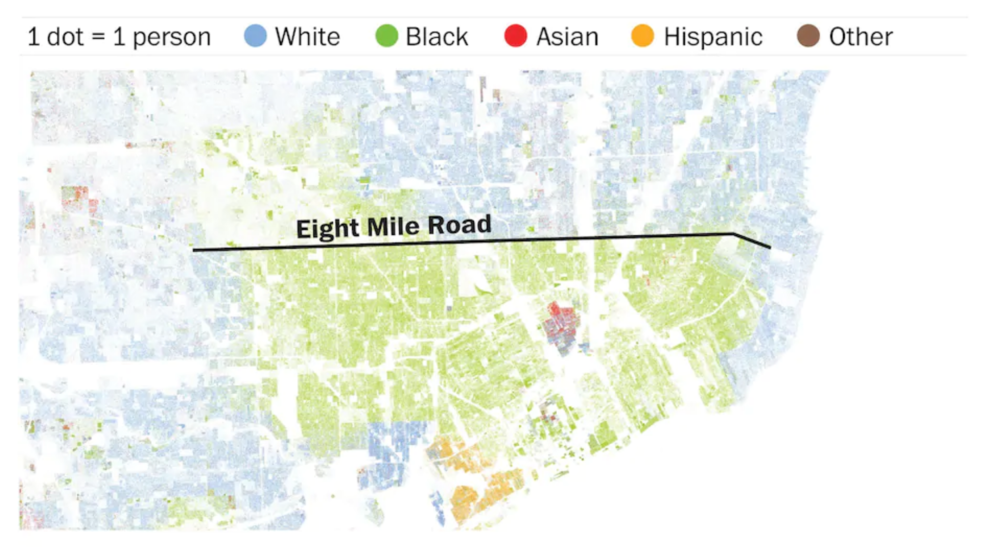
Dear friends,This Black History Month we celebrate diversity and look at the role cities play in both supporting and undermining Black Americans. Cities have provided dynamic context for events that define Black identity in the United States. They’ve also been testbeds for policies that segregated communities and worsened inequality. In 1933, the U.S. Congress created the Home Owners’ Loan Corporation to create “Residential Security” maps. These maps represented lending risk, denying loans in “hazardous” red neighborhoods while driving investment into “safe” green and blue neighborhoods. These lines were not haphazardly drawn. Redlined communities were overwhelmingly home to Black residents. As a result, redlining perpetuated racial discrimination by disinvesting in these communities, and its effects are still felt today. Two decades later, the federal government established a new program that would continue to segregate communities. Transportation engineers designed the Interstate Highway System to promote trade and facilitate travel among the states. Despite the IHS’ intent to connect, it’s design inevitably carved up communities. Local officials took this opportunity to use the IHS to bring economic growth and “rid cities of blight”. Disinvested neighborhoods, many of which were redlined, became victims to urban highway construction. Without deliberate effort, practitioners can easily fall back on these legacy systems and perpetuate vicious cycles of disinvesment. We must actively seek new ways to reverse decades of policies that displaced and destroyed Black communities. This month, I’m exploring how cities pursue strategies that will build better connectivity between neighborhoods and opportunity. Hope this gets you thinking,
Kate
|