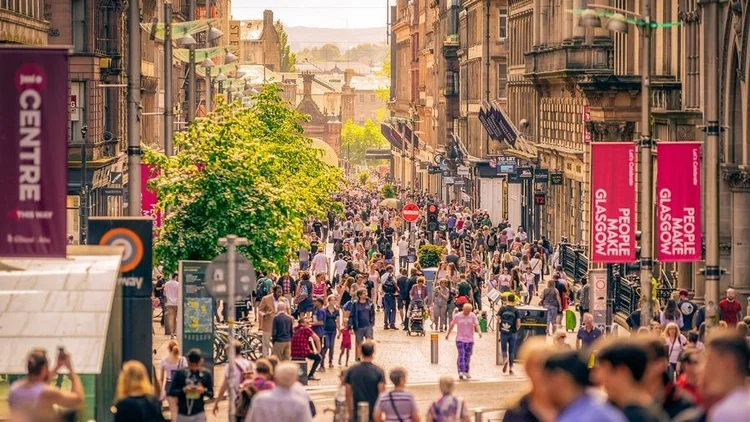
Density as urban fiscal healthDetroit is 139 square miles. That means you can squeeze Manhattan, SF, and Boston into Detroit’s borders. Whereas those three areas house a collective 3 million people (~19k people/square mile), Detroit has a population of 630k (~4.5k people/square mile). From a municipal fiscal perspective, this is a challenge for Detroit. Essentially, there aren’t enough taxpayers to support ongoing infrastructure maintenance costs (let alone costs of upgrade) within all of Detroit’s 139 square miles. Detroit has almost five times fewer people to pay for the same area of roadways, water pipes, street lights, public parks and transit as Manhattan, SF, and Boston combined. This is an oversimplified explanation of how Detroit’s infrastructure has degraded at a faster pace. Want more info? Check out this great overview of urban density and efficiency. Density as urban friendlinessWhile urban population/area can help us get a macro sense of density, we know that density can vary between neighborhoods and even between streets. In 2010 Jan Gehl defined the Gehl Door Average, a metric that measures the number of doors per 100 meters of street frontage. If you’ve been following Building Better Cities for a while, you probably remember this from Issue 15 as a way to maximize Halloween trick-or-treating. A street with a GDA above 10 is considered a friendly street and anything below 5 is considered boring. For example, Pearl Street in Boulder (another favorite city and past home) scores a 13 on the GDA even though its density is only 3.9k people/square mile (less than Detroit’s urban density). This metric gives us a sense of which zoning laws can promote urban friendliness. Other urban density resourcesA 30-minute city needs 50 people/hectare [Phys] Walkability, spontaneous activity happens at 32 homes/hectare [The Lancet] Density could solve affordable housing crisis by slashing land costs [Smart Growth America] Visualize population density by country [Visual Capitalist]
|