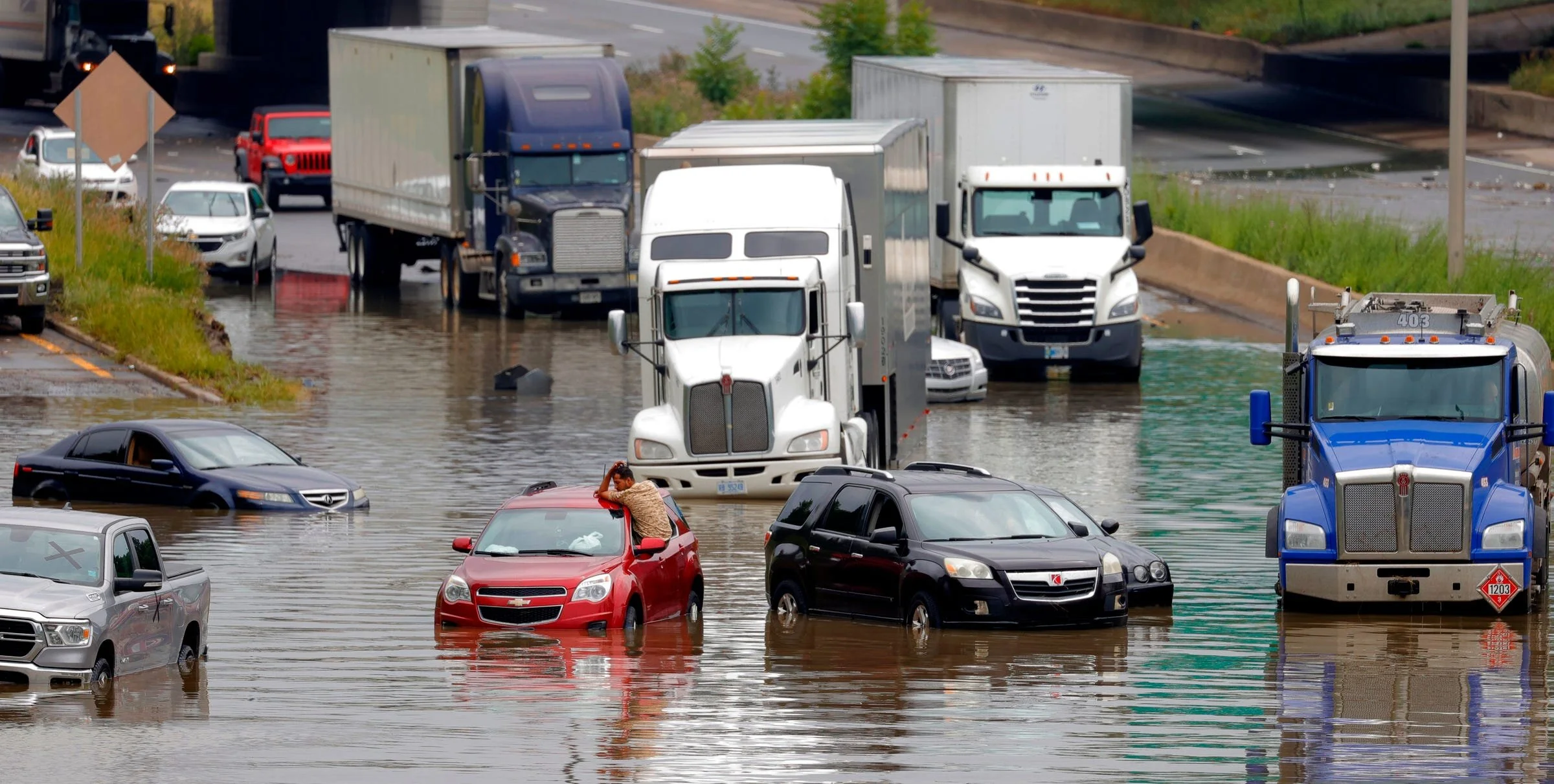
Detroit Under WaterYou know the saying- “April showers bring May flowers”. What happens when all of April, May, and June’s showers show up in July? Chaos. On June 26th, Detroiters woke up to the aftermath of 7 inches of rainfall. Sections of I-94 and I-75 flooded, forcing some drivers to abandon their cars. 20% of Detroit’s pump stations lost power or suffered mechanical problems. This meant that the combined sewer system overflowed and left sewage everywhere. Those most impacted saw 3-4 feet of sewer water in their basements. After days of rain, Detroiters emerged weary but resilient. Most dragged their soiled basement furniture to the sidewalk, ready for bulk pick-up, and submitted insurance claims. Others, often renters in disadvantaged neighborhoods, had a more difficult time getting the resources and support they needed to dry out their basements, replace totaled cars, and get the lights turned back on. For the most part, this wasn’t a surprising story. In 2014, Detroit lived through a 500-year storm which impacted 100k homes, damaged 18,000 structures, and required more than $1.2 billion of repairs. Since then, floods have ravaged the area in 2016, 2019, 2020, and now 2021. Over the past 5 years, Detroit has invested $500 million into the city’s storm and sewer system, replacing and lining existing underground pipes. But, $500 million can’t fix all 3,000 miles of sewers and 2,700 miles of water lines that were built decades ago. This all comes at a time when Washington, DC is debating a national infrastructure bill. As of June, the bill only includes $60 billion for water, storm, and sewer systems. It might be enough to update some pump stations, replace old brick pipe systems (you read that right!), and build more detention ponds and seawalls. But it won’t do it all. So here are some suggestions: Call your representatives and tell them that the country needs an infrastructure overhaul Share stories on social media of infrastructure failure in cities Bring innovative solutions to your clients and projects- here are a few creative ones for addressing stormwater and flooding Ask your public works department how they are building a more resilient city
|