Dear friends,

With a newsletter entitled, “Building Better Cities,” I am often asked, “better for whom?” We know that changes in our built environments can make things better, or worse, for different groups of people. The history of redlining continues to plague minority communities. Narrow sidewalks encumber those with disabilities. And, deciding where to build grocery stores and transit stops can perpetuate inequalities.

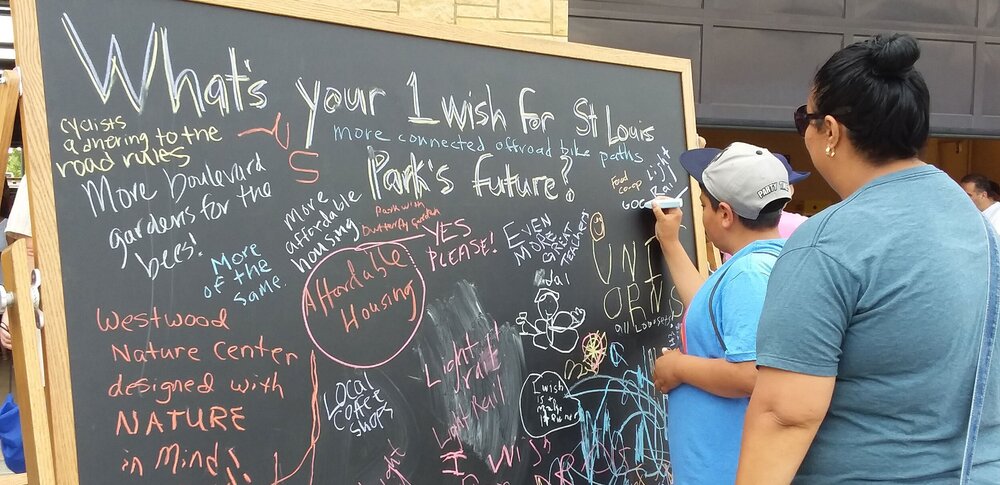
While working in almost a dozen cities, I’ve found there is no such thing as a one-size-fits-all solution. Each community is different. So, I turn to those who know these places best: residents, local business owners, grassroots leaders, historians, city agency reps, law enforcement, and other stakeholders. This community engagement facilitates difficult conversations, enables meaningful collaboration, and identifies better solutions.

Deciding how, when, and where this engagement occurs is always a challenge. If you engage too early without setting expectations, community trust can unravel. If you engage too late, the process can seem superficial. And, if a pandemic is preventing you from having one-on-one conversations, it doesn’t mean you stop engagement.

If you are struggling with these questions, reach out. My work has helped decision-makers better understand how to pursue meaningful and inclusive engagement. This month, I’m highlighting strategies that have been effective for building and engaging communities for the purposes of building better cities for more people.

Hope this gets you thinking,
Kate

Ideas Worth Discussing

Build Transparent Cities… with participatory budgeting

Participatory budgeting (PB) allows community members to decide how to spend part of a public budget for new infrastructure, social programs, etc. 

  • 3,500 voters divided $1 million in public funds for transportation in Atlanta’s Downtown Decides! [Strong Towns]

  • 1,600 public space proposals were considered for Cambridge’s 2019 PB campaign [The Crimson]

  • Successful PB depends upon pre-existing participation [Bulletin of Geography]

Build Inclusive Cities… with local land ownership

Local land ownership is exactly how it sounds. Instead of selling land and property to absentee (non-local) landlords, sell and transfer land to neighbors who know the community and can grow community wealth.

Build Responsive Cities… with civic technology

Civic technology creates stronger feedback loops between people and government by giving people a voice to participate in decision making and/or the delivery of public serivces.

  • COVID-19 has forced local governments to shift to civic technology for virtual town halls [NextCity]

  • Select the right civic technology at the right time for the best feedback [Harvard Data-Smart City Solutions]

  • Using technology to understand, not engage with, a community has halted projects [Wharton]


Recent Work

The color of money: Closing the racial wealth gap with crowdfunding

Centuries of discriminatory policies have erased wealth for Black families. In the US, the average white family has $171,000 of wealth, compared to $17,600 for the average Black family. Crowdfunding can shift the narrative.

Green infrastructure can do it all… if only we let it

Green infrastructure (GI) can mitigate stormwater run-off, reduce energy bills, build community value, and more. Learn how you can start building GI.


Cities in the News

Economic innovation needs 1.2 million people in one city [SciTech Daily

Hurricane Laura highlights that US coastal communities are poorer than average [Quartz]

Approvals for small modular reactors, opens a new path to renewable energy [Scientific America

Bonds were paying Chicago’s legal settlements- now investors are aligning dollars with racial justice [Next City]

Replace foreign building design with nature-inspired design for climate change adaptation [The Conversation]

Philly’s water debt is going down with this income-based rate system [NextCity]


Get Involved (all events are free)

9/14-9/21: #RebuildBetter [United for Infrastructure]

9/16: Infrastructure, Race, and Equity [United for Infrastructure]

9/16, 9/23, 9/30: Compassionate Communities Workshop [BLDG Memphis]

9/21: Cities For Women, By Women, With Women [SPUR]

9/30: Transportation Equity in a New Era [Meeting of the Minds]


Share Your Work

I would love to hear from you and learn more about your work. Don’t hesitate to reach out to continue the conversation. In the meantime, please forward this email, subscribe your friends, and follow @KateGasparro to stay in touch.